
Emly Labs
Creates AI chatbots and predictive models without programming through a no-code framework.
Are you the owner?
Claim this tool to publish updates, news and respond to users.
Sign in to claim ownership
Sign InDescription
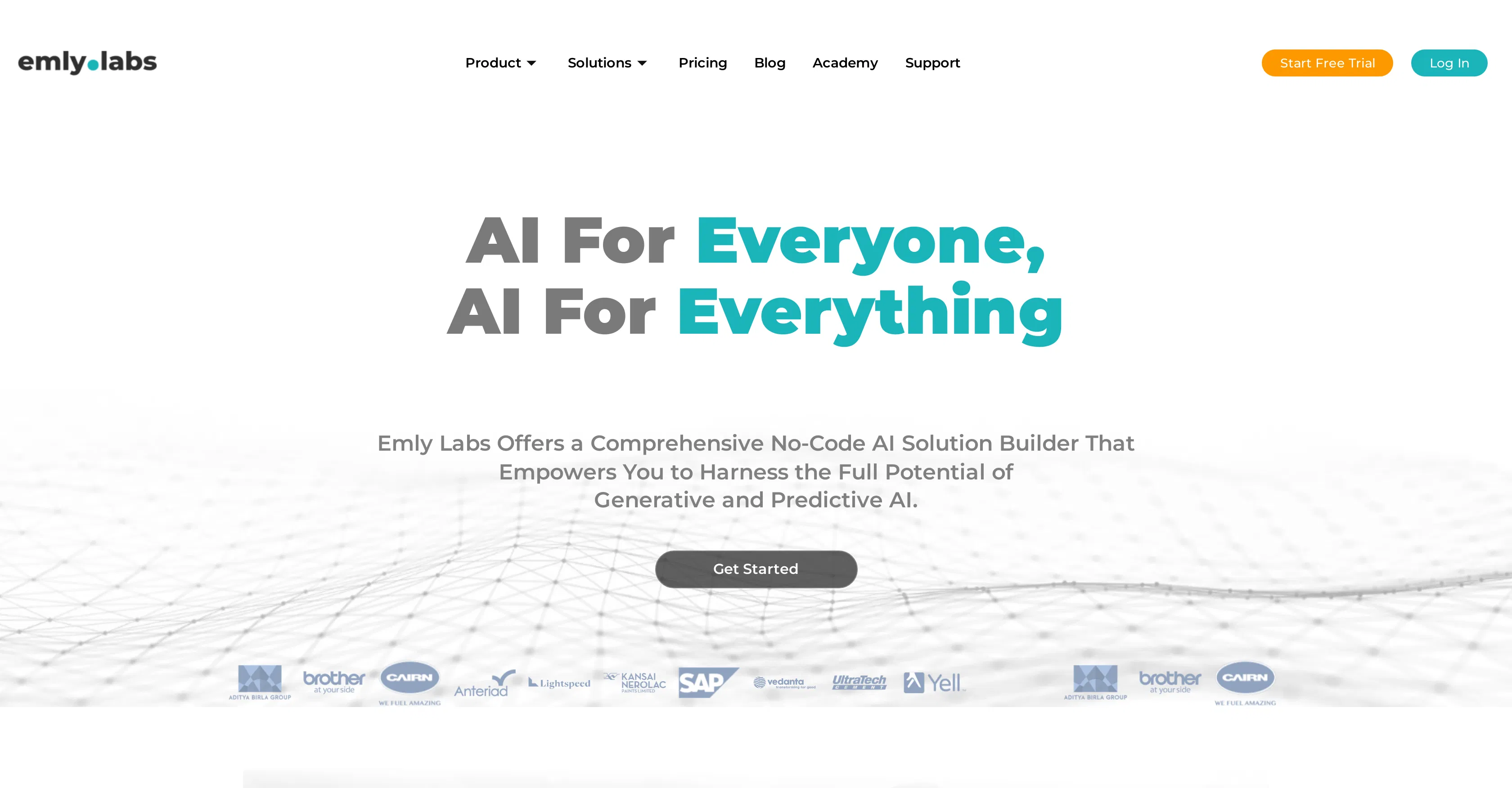
Emly Labs is a no-code framework for implementing artificial intelligence, developed by the company of the same name. Its main value lies in democratizing access to advanced AI technologies, allowing business users and analysts without deep technical knowledge to independently create and deploy intelligent solutions. The tool eliminates the complexity barrier, turning AI development from a task for engineers into a tool for a wide range of specialists seeking to optimize processes and extract insights from data.
The platform's main capabilities include an AI chatbot builder for automating communications with customers and employees. The second key module allows building predictive models for forecasting trends, customer churn, or demand. For preparing information for analysis, EMLY DATALAB is provided — a tool for cleaning, transforming, and enriching data. The system also offers visual workflows for designing the logic of AI applications, tools for monitoring and managing deployed models, and the ability to segment data for more accurate analysis.
A distinctive feature of Emly Labs is its strict focus on a no-code approach, where the entire process — from data loading to model training and publication — is carried out through an intuitive drag-and-drop interface. Technically, the platform likely abstracts work with popular ML frameworks and provides pre-trained model templates. It is a web application accessible from a browser and can integrate with external systems via API, as well as import data from various sources such as CSV files, databases, or cloud storage.
It is ideally suited for business analysts, product managers, and small to medium business owners who want to implement AI to solve specific tasks without hiring expensive specialists. Use cases include creating a chatbot for a website support service, developing a model for forecasting sales based on historical data, analyzing customer feedback to identify sentiment, or automating the classification of internal documents. The tool will also be useful for consulting and digital agencies for rapid prototyping of AI solutions for their clients.